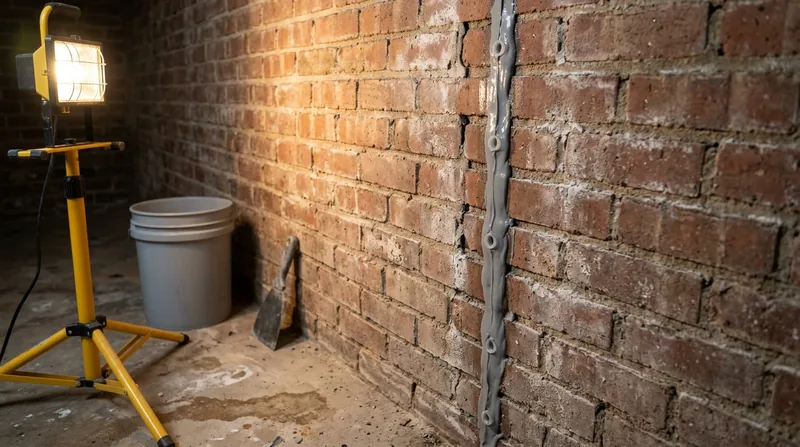




Greensboro sits on red Piedmont clay over decomposed granite, ground that swells when it is wet and shrinks when it dries. That constant movement opens hairline cracks in poured concrete walkout walls, shifts the old stone and brick foundations in Fisher Park and College Hill, and works on the block walls of 1950s ranches in Starmount and Latham Park. If you have spotted a crack in your foundation, Foundation Crack Repair in Greensboro starts with diagnosing what the crack is telling you, not with a bucket of hydraulic cement. Some cracks are cosmetic shrinkage, some are active leaks that need epoxy injection or polyurethane injection, and some signal a wall that is moving. We inspect, we match the repair to the cause, and we tell you plainly when simple sealing is enough. If you also see damp walls or efflorescence, our basement waterproofing service covers the wider moisture picture.
Why Foundation Cracks Show Up So Often in Greensboro's Red Clay
Greensboro's soil is the whole story. Piedmont clay holds water against the foundation like a sponge, then shrinks back in a dry July and pulls away from the wall. That wet-dry cycle loads and unloads the footing year after year, and cracks open at the corners, at cold joints, and along the middle of long walls. Homes near Buffalo Creek and Reedy Fork see the worst of it after big storms, when saturated soil drives hydrostatic pressure against basement walls.
- Poured concrete walls in Summerfield and Oak Ridge walkouts often crack at the tie-rod holes and vertical control joints.
- Old brick and stone foundations in Irving Park and Lindley Park crack along mortar joints and show efflorescence where water moves through.
- Block walls in Starmount and Westerwood develop stair-step cracks when the footing settles unevenly.
- Homes on the flat tracts toward Gibsonville and Whitsett are mostly slab-on-grade, so foundation cracks there show up as slab cracks rather than basement wall cracks.
Reading the crack correctly on the first visit is what keeps a small repair from turning into a wall problem.
Key info: A hairline vertical crack in a College Hill basement that leaks after rain is usually a good candidate for injection. A horizontal crack near the middle of a bowing block wall is a different animal and needs a structural look before anyone injects it.
For the official word on structural permits and inspection requirements in the city, the Greensboro Engineering and Inspections Department is the authority to check with before structural work begins.
How We Diagnose and Repair Foundation Cracks in Greensboro
Every crack gets the same first treatment: a slow walk of the basement or foundation wall, a moisture meter, and a look at the grading and downspouts outside. We map the crack direction, width, and whether it is active, then choose the method. Injection work is done from the inside, so we do not dig up your shrubs or your driveway to fix a leaking crack.
- We inspect the full wall and the exterior grade to confirm the crack is not part of a larger movement pattern.
- We clean the crack and set injection ports at intervals along its length.
- We trim the ports flush, patch the surface, and check the repair under real water pressure before we leave.
- If the crack is wider, horizontal, or paired with a bowing wall, we recommend a structural assessment and discuss carbon fiber straps or wall anchors.
The goal is a repair that matches the crack, not a patch that hides it.
Key info: On a 1960s split-level in Jamestown, a homeowner had patched the same corner crack three times with hydraulic cement. The crack kept weeping because the real driver was a downspout dumping against the foundation. We injected the crack and extended the discharge, and it has stayed dry through two hurricane remnants.
If the inspection shows water is entering along the whole wall rather than one crack, an interior drain tile system is often the better long-term answer than chasing cracks one at a time.
Repair Methods We Match to Each Crack
Not every crack wants the same product. The table below shows how we sort them, and why the cheapest tube of sealer is rarely the right call on a basement wall.
| Approach | Description | Best for |
|---|---|---|
| Epoxy injection | Structural epoxy bonds the crack faces back together and restores wall strength. | Non-active vertical cracks in poured concrete walls. |
| Polyurethane injection | Foam expands on contact with water and seals an actively leaking crack. | Wet, weeping cracks and cold joints that leak after rain. |
| Surface sealing and parging | Cementitious or membrane coat over the crack and surrounding wall. | Cosmetic shrinkage cracks and wall prep before a membrane. |
| Carbon fiber straps | Straps anchored top and bottom resist inward wall movement. | Bowing block walls with horizontal cracking. |
| Wall anchors | Anchors driven into stable soil outside pull the wall back to plumb. | Walls that have moved and need realignment, not just bracing. |
We pick the method after the inspection, and we explain why one fits better than another before any work starts.
Foundation Crack Repair Cost in Greensboro: What to Expect
Most single-crack injection repairs in Greensboro start around From $450, which covers the inspection, the ports, the material, and the surface patch. That figure moves with crack length, whether the crack is actively leaking, and whether we are working in a finished basement where we need to protect flooring and drywall. Structural work like carbon fiber straps or wall anchors is priced after the on-site assessment, because the number of straps and the wall length drive the job.
Getting two or three estimates is smart on any foundation work. Ask each contractor what method they plan to use and why, whether the crack is active, and what they found outside that might be feeding it. A quote that only lists a price without a method is not a quote you can compare. Our full pricing overview lays out how we build estimates so you know what you are reading.
Foundation Crack Repair Near Me: How to Vet a Contractor Near Greensboro
Foundation work is not a place to hire the first truck that pulls up. You want a contractor who is licensed and insured, who will put the method in writing, and who will tell you when a crack does not need structural repair. Ask for references from jobs in your part of town, and ask whether the repair is a transferable warranty if you sell the house.
Permits matter for structural foundation repair and for any work that alters drainage or the sanitary connection of a sump discharge. Rules vary by jurisdiction, so confirm with the local building department before work begins. If your neighborhood has HOA requirements, check those too, especially where exterior excavation or grading changes are involved.
Start with a conversation. Reach out through our contact page and we will set up a free basement inspection, look at the crack with you, and give you a straight answer on what it needs.
Foundation Crack Repair in Greensboro: Pricing Guide
| Service | Price | Details |
|---|---|---|
| Single crack injection (epoxy or polyurethane) | Starting at $450 | Includes inspection, injection ports, material, and surface patch; longer or actively leaking cracks move the price up. |
| Multiple crack injection | Starting at $750 | Covers two to three cracks in the same basement; total length and access behind finished walls drive the number. |
| Crack repair plus exterior grade correction | Starting at $950 | Adds downspout extensions and regrading at the leak point when exterior water is feeding the crack. |
| Carbon fiber strap or wall anchor repair | On estimate | Structural work priced after on-site assessment; wall length, movement, and strap count set the scope. |
| Travel | Included | In Greensboro and surrounding areas, no separate call-out or mileage fee. |
| Estimate | Free | Response within 24h at (336) 203-7271, no obligation to book. |
Indicative pricing, the exact cost depends on square footage, finish, and site access. Free personalized estimate within 24h at (336) 203-7271.


