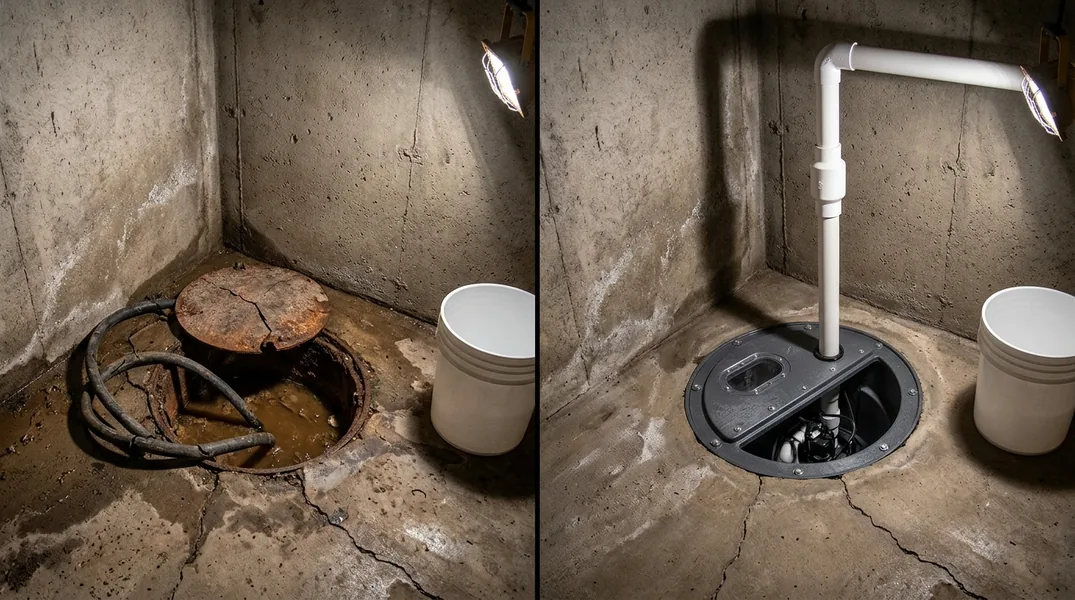
Why Summer Thunderstorms Put Your Sump Pump to the Test
Summer in Greensboro means afternoon thunderstorms that can drop an inch of rain in less than an hour. That kind of downpour sends water rushing toward your foundation, and your sump pump becomes the last line of defense between that water and your finished basement. If the pump hasn't been checked since last fall, you're gambling with thousands of dollars in potential damage.
Most sump pump failures happen at the worst possible moment: during the heaviest rain, often accompanied by a power outage. A pump that ran fine in April may have a stuck float, a clogged intake, or a check valve that no longer seals. The time to find those problems is now, not at 2 a.m. when water is creeping across your floor. A little preventive maintenance in late spring goes a long way toward keeping your basement dry all summer.
Your Sump Pump Maintenance Checklist Before Storm Season
Start by testing the pump manually. Pour a bucket of water into the sump pit until the float rises and the pump kicks on. It should start quickly, discharge water smoothly, and shut off when the water level drops. If it hesitates, runs loudly, or cycles on and off repeatedly, that's a warning sign. While you're at it, check the discharge line outside to make sure it isn't clogged with debris or buried under mulch, and confirm it directs water several feet away from the foundation.
Next, inspect the Basement Waterproofing components around the pit. Clear any silt or gravel from the intake screen, and make sure the pit itself is free of debris. A Interior Drain Tile System that feeds the pit should also be checked for blockages. If you're not comfortable doing this yourself, a professional inspection is a smart investment before the stormy months arrive. You can request a free estimate to have a technician review your entire setup.
Don't Overlook the Sump Pump Check Valve
The sump pump check valve is a small but critical piece of the system. It prevents water from flowing back into the pit after the pump shuts off. Without a working check valve, every cycle sends water back down the discharge line, forcing the pump to work harder and run more often. Over time, that shortens the pump's lifespan and can leave standing water in the pit. During your maintenance check, listen for a thud or gurgling sound after the pump stops. That often means the valve is failing.
Replacing a check valve is inexpensive and takes only a few minutes, but it's easy to forget. If your valve is more than a few years old, or if you've noticed water cycling back into the pit, swap it out before the summer storms hit. A properly functioning valve keeps your pump efficient and your basement drier. It's one of the simplest upgrades you can make to your Foundation Waterproofing system.
Battery Backup Sump Pump: Your Safety Net During Power Outages
Summer thunderstorms in High Point and throughout the Triad frequently knock out power, and a primary sum pump that relies on electricity will stop working exactly when you need it most. That's why a battery backup sump pump is essential. It runs on a charged battery when the power fails, keeping water moving out of the pit until electricity returns. Without one, a heavy storm combined with an outage can flood a basement in minutes.
Test your backup system by unplugging the primary pump and filling the pit with water. The backup should activate automatically. Check the battery charge indicator and top off the water levels if needed. Most backup batteries last three to five years, so note the installation date and replace it proactively. If you don't have a backup yet, or if yours is outdated, this is the single most important upgrade you can make before storm season. Call Greensboro Waterproofing at (336) 203-7271 to discuss options for your home.
When to Call a Professional for Sump Pump Service Near Me
Some maintenance tasks are straightforward for a handy homeowner, but others require an experienced eye. If your pump is more than seven to ten years old, runs constantly, makes grinding noises, or has visible rust, it's time for a professional assessment. The same goes for any signs of water intrusion around the pit or along the basement walls. Catching these issues early is far cheaper than repairing water damage later. If you've noticed dampness or efflorescence, your Exterior Basement Waterproofing may also need attention.
Homeowners in Jamestown and Summerfield face the same storm risks as the rest of the region, and a qualified technician can spot problems you might miss. If you're searching for sump pump service near me, look for a local company that understands the specific soil and drainage conditions in the Piedmont. Greensboro Waterproofing offers thorough inspections and transparent pricing, so you know exactly what to expect before any work begins.
Final Steps to Protect Your Basement This Summer
Once your maintenance checklist is complete, take a few final precautions. Make sure the ground around your foundation slopes away from the house, and clean your gutters so rainwater doesn't pool near the basement walls. Consider a water alarm in the pit that alerts you if the water level rises unexpectedly. These small steps, combined with a well-maintained pump and a reliable backup, give you the best chance of staying dry through even the heaviest summer storms.
Don't wait for the first thunderstorm to discover a problem. A little preparation now saves you from a very wet, very expensive mess later. If you'd like help getting your system storm-ready, reach out to Greensboro Waterproofing for a free estimate or call (336) 203-7271. We're here to help homeowners across Greensboro protect their basements year-round.
Looking for a professional basement waterproofing contractor in Greensboro? Greensboro Waterproofing responds fast for all your basement waterproofing needs.
Get a Free QuoteOur services: Basement Waterproofing · Interior Drain Tile System · Exterior Basement Waterproofing